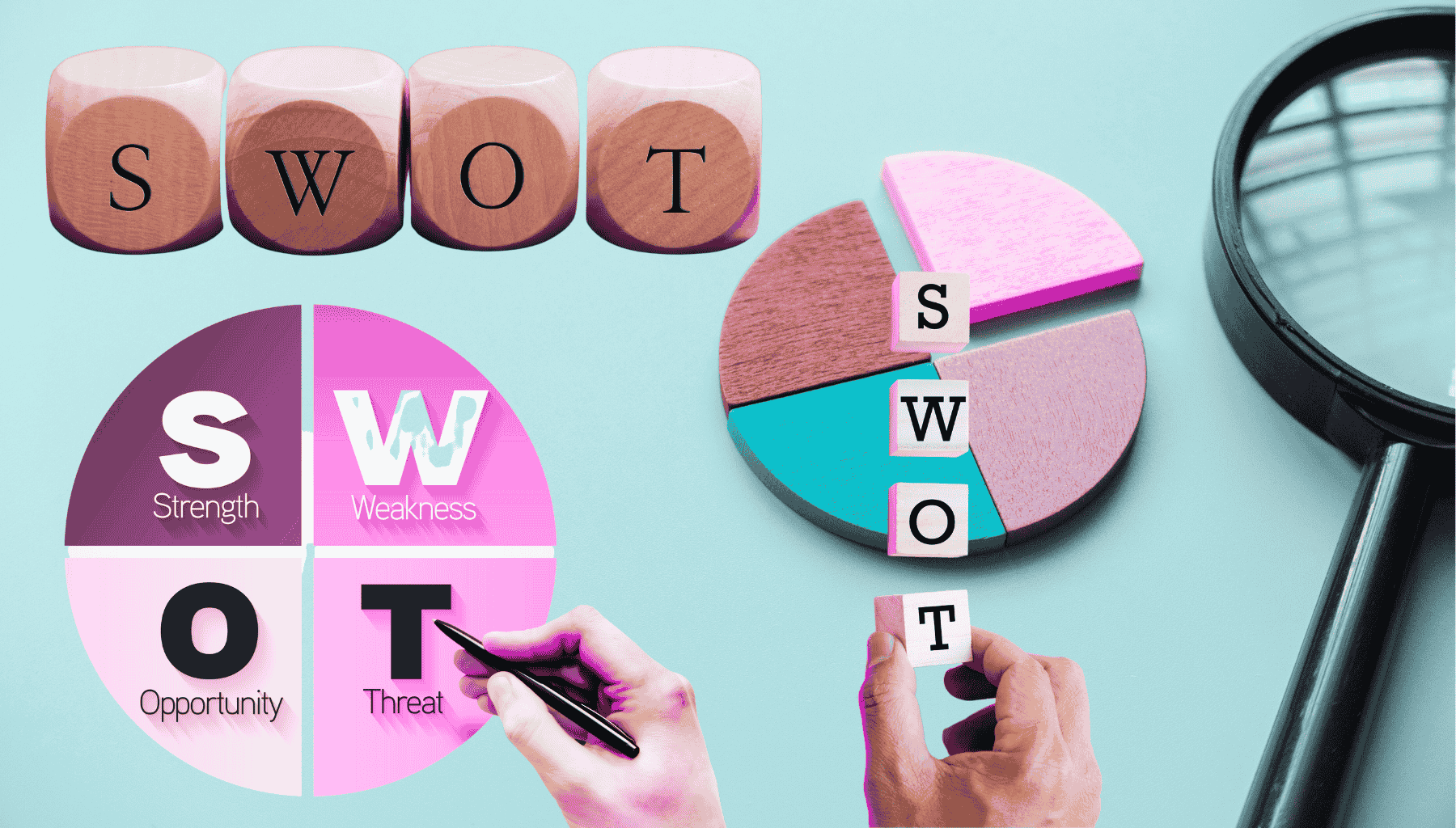
Identify key opportunities and assess strengths, weaknesses, opportunities, and threats (SWOT) to inform decision-making. Leverage data-driven insights to develop strategies that maximize growth and competitive advantage.
Opportunities & SWOT Analytics for Strategic Growth
Hire an Expert Jataye Agent Today : Post your Requirements
Empower Your Business with Smart, Scalable, and On-Demand Jataye Assistance
Get in Touch with JATAYE SOLUTIONS – Your Trusted Business Partner
Reach Out for Innovative Solutions, Expert Support, and Seamless Collaboration
Book Your Free Consultation with JATAYE SOLUTIONS – Let's Build Success Together
Schedule a No-Cost Strategy Session for Tailored Solutions and Expert Guidance
Description
Uncover hidden opportunities, mitigate risks, and build a robust growth strategy with our expert analysis.
Strategic Clarity: Opportunities & SWOT Analytics for Growth
Insightful Evaluation: Comprehensive SWOT Analysis
- Internal Assessment: Evaluating your strengths (e.g., resources, capabilities) and weaknesses (e.g., limitations, inefficiencies).
- External Assessment: Identifying opportunities (e.g., market trends, technological advancements) and threats (e.g., competition, economic factors).
- Data Collection & Analysis: Gathering and analyzing relevant data from various sources.
- Visual Representation: Presenting findings in a clear and concise SWOT matrix.
- Strategic Clarity: Gain a comprehensive understanding of your current position.
- Informed Decision-Making: Make data-driven decisions based on accurate insights.
- Risk Mitigation: Identify and address potential threats proactively.
- Opportunity Identification: Uncover hidden opportunities for growth.
Market Trend Analysis
Identifying emerging trends and customer needs.
Technological Innovation Assessment
Evaluating the potential of new technologies.
Competitive Gap Analysis
Identifying areas where competitors are lacking.
Customer Feedback Analysis
Understanding customer pain points and unmet Prioritization Framework needs.
Prioritization Framework
Developing a framework to prioritize opportunities based on potential impact and feasibility.
Targeted Growth
Focus on high-potential opportunities.
Differentiation
Identify areas for innovation and differentiation.
Increased Revenue
Capitalize on emerging market trends.
Strategic Advantage
Gain a competitive edge.
We develop strategies to minimize threats and manage risks effectively.
Proactive Defense: Risk Assessment & Mitigation
- Threat Identification: Identifying potential threats to your business.
- Risk Assessment: Evaluating the likelihood and impact of each threat.
- Mitigation Strategy Development: Developing strategies to minimize the impact of threats.
- Contingency Planning: Creating plans to address unexpected events.
- Monitoring & Evaluation: Continuously monitoring risks and evaluating mitigation strategies.
- Reduced Losses: Minimize the impact of potential threats.
- Improved Resilience: Build a more resilient business.
- Enhanced Stability: Ensure business continuity.
- Increased Confidence: Make decisions with greater confidence.
- Trend Identification: Identify emerging trends in your industry.
- Trend Impact Assessment: Evaluate the potential impact of trends on your business.
Clear Growth Path
Develop a structured plan for achieving your goals.
Competitive Advantage
Gain insights into your competitors and market.
Trend Impact Assessment
Evaluate the potential impact of trends on your business.
Adaptation Strategy
Develop strategies to adapt to changing market conditions.

General FAQs
What is SWOT Analytics for Strategic Growth?
SWOT (Strengths, Weaknesses, Opportunities, and Threats) analytics is a strategic tool that helps businesses assess internal and external factors to drive growth and competitive advantage.
How does SWOT analysis benefit businesses?
It helps companies identify strengths to leverage, weaknesses to improve, opportunities to explore, and threats to mitigate, enabling better decision-making and planning.
Can SWOT analytics be applied to startups and established businesses?
Yes, both startups and large enterprises use SWOT analysis for strategic planning, market positioning, and long-term growth optimization.
What industries benefit from SWOT analytics?
Every industry, including tech, healthcare, finance, manufacturing, and retail, can use SWOT analytics to enhance market strategy and business performance.
How often should a company perform a SWOT analysis?
Businesses should conduct SWOT analysis quarterly or whenever they face major market changes, competition shifts, or internal restructuring.
Technical FAQs
How does AI enhance SWOT analysis?
AI-powered analytics extract data from market trends, customer feedback, financial reports, and competitor insights to provide real-time, data-driven SWOT analysis.
Can SWOT analytics help with risk management?
Yes, identifying threats and weaknesses allows businesses to proactively implement risk mitigation strategies and crisis management plans.
What data sources are used in SWOT analytics?
SWOT analysis integrates data from business reports, financial statements, industry trends, customer insights, and competitor benchmarking.
How can SWOT analysis drive innovation?
By identifying opportunities and leveraging strengths, businesses can explore new products, services, and technological advancements to stay ahead of competitors.
What are the future trends in SWOT analytics?
Trends include AI-driven predictive SWOT analysis, real-time competitive intelligence, automated market risk assessments, and deep learning for strategic forecasting.